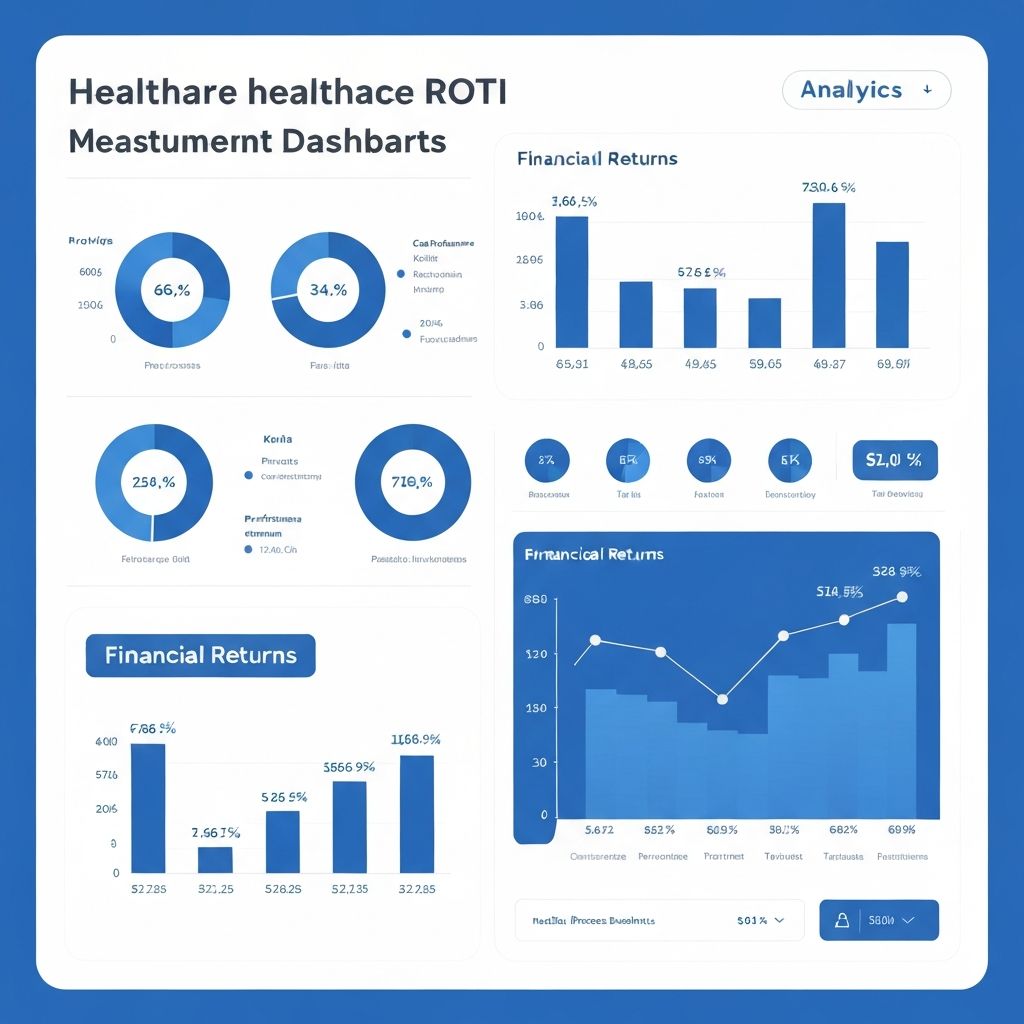
Investing in AI technology for your medical practice represents a significant commitment of resources. Whether you're considering AI implementation or have already begun your digital transformation journey, understanding how to measure return on investment (ROI) is crucial for justifying costs, optimizing implementation, and demonstrating value to stakeholders.
Why Measuring AI ROI Matters
Unlike traditional technology investments, AI's value often manifests across multiple dimensions—some easily quantifiable, others more nuanced. A comprehensive ROI measurement approach accounts for direct financial returns, operational efficiency gains, quality of care improvements, and competitive positioning advantages.
For mid-size medical practices, demonstrating AI ROI is particularly important. These organizations must carefully allocate limited resources while competing with larger healthcare systems that have substantial technology budgets. Clear ROI metrics provide the evidence needed to secure ongoing investment and stakeholder buy-in.
Financial ROI Metrics
Revenue Growth
Track how AI implementation affects your practice's top-line revenue. Key indicators include patient acquisition rate, patient retention rate, average revenue per patient, and new service line revenue. AI-powered patient acquisition strategies typically increase new patient flow by 25-40%, while retention improvements from enhanced patient experience can boost lifetime value by 30% or more.
Cost Reduction
AI often delivers ROI through operational cost savings. Monitor administrative labor costs, no-show rates and associated revenue loss, patient acquisition cost (CAC), and supply chain optimization savings. Practices implementing AI typically see 20-35% reduction in administrative overhead and up to 65% decrease in no-show rates.
Collection Rates and Revenue Cycle
AI can significantly improve revenue cycle management. Track days in accounts receivable, first-pass claim acceptance rate, patient payment collection rate, and denial rate reduction. AI-optimized billing processes can reduce claim denials by 40% and accelerate payment collection by 20-30 days.
Operational Efficiency Metrics
Time Savings
Quantify how AI frees up staff time for higher-value activities. Measure hours saved on appointment scheduling, documentation time reduction for providers, administrative task automation hours, and patient communication time efficiency. Convert these time savings into financial value by multiplying saved hours by staff costs.
Capacity Utilization
AI optimization often allows practices to serve more patients without increasing resources. Track appointment slot utilization rate, provider schedule optimization, room turnover time, and patient throughput per day. Improved scheduling through AI can increase capacity utilization by 15-25% without additional staffing.
Quality of Care Indicators
While harder to quantify financially, quality improvements deliver substantial long-term value. Monitor patient satisfaction scores (CAHPS, NPS), clinical outcome improvements, preventive care completion rates, and chronic disease management effectiveness.
Higher patient satisfaction correlates strongly with better retention and referrals. Each point improvement in patient satisfaction scores can translate to 2-3% increase in patient retention, which compounds significantly over time.
Patient Experience Metrics
AI's impact on patient experience drives multiple downstream benefits. Track wait time reduction, response time to patient inquiries, online review ratings and volume, and patient referral rate. Improved patient experience typically generates 20-40% increase in online reviews and 35% boost in patient referrals.
Calculating Comprehensive ROI
To calculate overall AI ROI, use this framework:
Total Benefits = Revenue increases + Cost savings + Efficiency gains (converted to dollar value)
Total Costs = Software licensing + Implementation + Training + Ongoing support
ROI = ((Total Benefits - Total Costs) / Total Costs) × 100%
Best Practices for ROI Measurement
Establish Baseline Metrics
Before implementing AI, document current performance across all relevant metrics. This baseline enables accurate before-and-after comparisons and prevents overestimating AI's impact.
Set Realistic Timeframes
AI ROI typically follows a J-curve—initial investment and learning curve costs precede benefits. Most practices see positive ROI within 6-12 months, with benefits accelerating over time. Plan to measure ROI at 3, 6, 12, and 24-month intervals.
Account for Intangible Benefits
Don't overlook hard-to-quantify benefits like staff satisfaction and retention, competitive market positioning, brand reputation improvement, and innovation culture development. While these may not appear directly in ROI calculations, they contribute significantly to long-term practice success.
Use Control Groups When Possible
If implementing AI in phases, compare performance between AI-enabled and traditional processes to isolate AI's specific impact and control for external factors.
Common ROI Measurement Pitfalls to Avoid
Focusing solely on cost reduction while ignoring revenue growth opportunities, measuring too early before AI systems have been optimized, failing to account for total cost of ownership, attributing all improvements to AI without considering other factors, and neglecting to track metrics consistently over time.
Taking Action on ROI Insights
ROI measurement isn't just about proving value—it's about continuous improvement. Use your metrics to identify which AI applications deliver the strongest returns, determine where to expand AI implementation, optimize underperforming AI processes, and make data-driven decisions about future AI investments.
Regular ROI reviews create a feedback loop that maximizes AI's value to your practice. Share results with stakeholders to maintain support and identify new opportunities for AI-driven improvements.