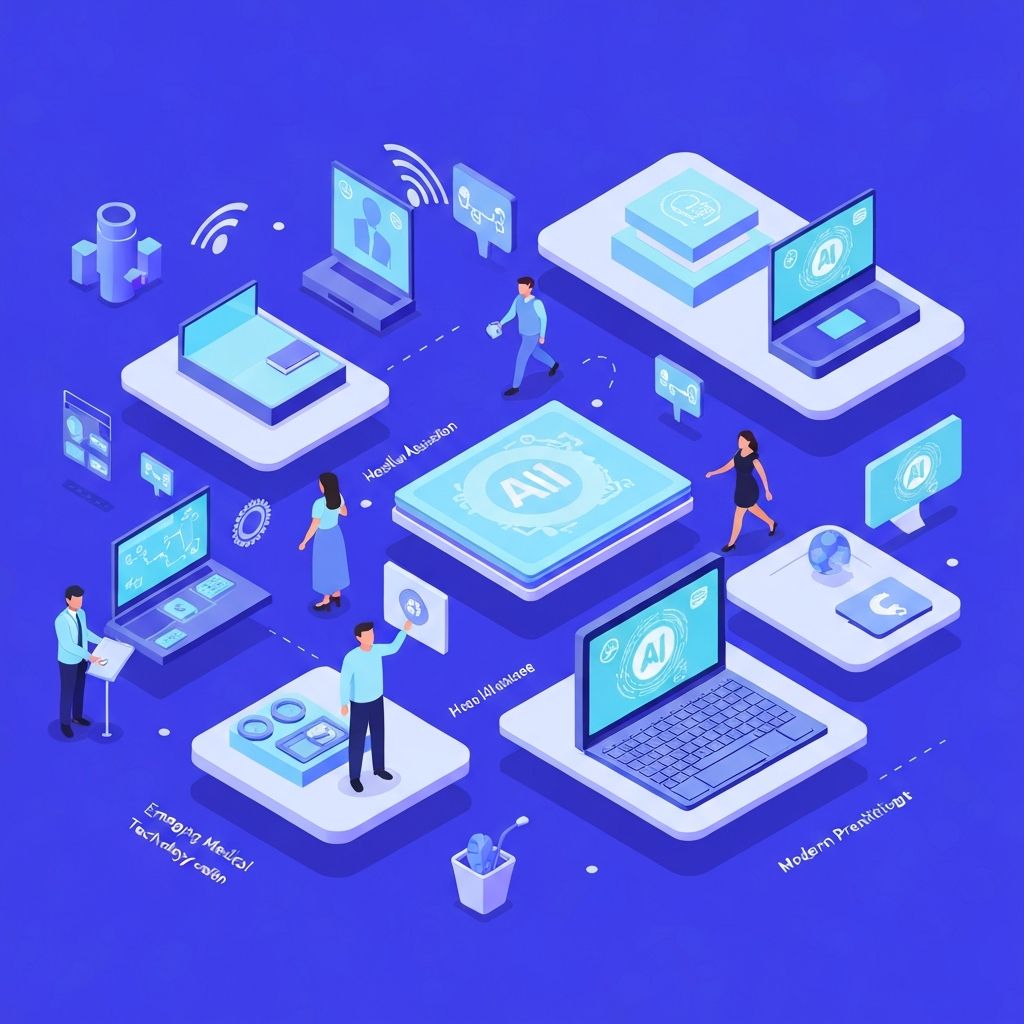
As we move through 2024, artificial intelligence continues to reshape healthcare at an unprecedented pace. For mid-size medical practices, staying ahead of these trends isn't just about competitive advantage—it's about survival in an increasingly technology-driven healthcare landscape. Let's explore the most impactful AI trends that will define healthcare's future.
1. Hyper-Personalized Patient Engagement
The era of one-size-fits-all patient communication is ending. AI-powered personalization engines now analyze individual patient preferences, communication styles, health literacy levels, and engagement patterns to deliver tailored experiences.
Advanced natural language processing enables AI to adjust tone, complexity, and channel based on each patient's profile. A tech-savvy millennial might receive concise text updates with links to detailed information, while an older patient might get phone calls with straightforward explanations.
This level of personalization extends to care recommendations, appointment scheduling preferences, and preventive health reminders. Practices implementing hyper-personalized engagement see dramatic improvements in patient satisfaction and adherence to care plans.
2. Predictive Analytics for Practice Operations
2024 marks the transition from reactive to predictive practice management. AI systems now forecast demand patterns, resource needs, and potential operational bottlenecks before they occur.
These predictive models analyze historical data, seasonal patterns, local health trends, and even weather forecasts to optimize scheduling, staffing levels, inventory management, and patient flow.
Imagine knowing three weeks in advance that flu season will peak earlier than usual in your area, allowing you to adjust staffing and vaccine inventory proactively. This level of operational intelligence transforms practice efficiency and patient experience.
3. AI-Assisted Clinical Decision Support
Clinical decision support systems are evolving from rule-based tools to sophisticated AI partners that learn and adapt. These systems analyze vast medical literature, clinical guidelines, and practice-specific patient data to provide contextualized recommendations.
Modern AI assistants can identify potential drug interactions, suggest evidence-based treatment protocols, flag abnormal lab results that might be overlooked, and recommend preventive interventions based on risk profiles.
Critically, these systems enhance rather than replace clinical judgment. They surface relevant information at the point of care, allowing providers to make more informed decisions while maintaining final authority over patient care.
4. Automated Documentation and Ambient Listening
Provider burnout from documentation burden is a crisis in healthcare. AI ambient listening technology addresses this by capturing natural patient-provider conversations and automatically generating structured clinical notes.
These systems understand medical terminology, extract relevant clinical information, organize notes according to documentation requirements, and integrate directly with EHR systems.
Early adopters report reducing documentation time by 60-70%, allowing providers to see more patients or simply achieve better work-life balance. The technology also improves documentation quality and completeness, supporting better care coordination and accurate billing.
5. Virtual Health Assistants and Triage
AI-powered virtual assistants are becoming sophisticated enough to handle initial patient interactions, symptom assessment, and basic triage. These systems use conversational AI to understand patient concerns, ask relevant follow-up questions, assess urgency, and direct patients to appropriate care levels.
For practices, this means 24/7 patient access without proportional staffing increases. Patients get immediate responses to questions, while practices reduce call volume and ensure urgent cases are prioritized appropriately.
6. Revenue Cycle Optimization Through AI
AI is transforming the notoriously complex healthcare revenue cycle. Machine learning models now predict claim denial likelihood before submission, identify coding optimization opportunities, automate prior authorization processes, and personalize patient payment plans based on financial capacity.
Practices implementing AI-powered revenue cycle management see first-pass claim acceptance rates above 95% and reduce days in accounts receivable by 30-40%. The financial impact is substantial, improving cash flow and reducing administrative overhead.
7. Population Health Management and Chronic Disease Prevention
AI enables practices to shift from reactive sick care to proactive health management. Advanced analytics identify high-risk patients, predict disease progression, recommend preventive interventions, and track population health trends.
For practices participating in value-based care arrangements, these capabilities are essential. AI helps manage patient panels proactively, reducing hospitalizations and emergency visits while improving outcomes and generating shared savings.
8. Multimodal AI Integration
The future isn't about isolated AI tools—it's about integrated systems that combine multiple AI modalities. Modern platforms merge natural language processing for documentation, computer vision for image analysis, predictive analytics for operations, and conversational AI for patient interaction.
This integration creates synergistic benefits where each AI capability enhances others. The whole becomes greater than the sum of its parts, delivering comprehensive intelligence across the entire practice ecosystem.
9. Federated Learning for Privacy-Preserving AI
As AI becomes more sophisticated, privacy concerns grow. Federated learning represents an elegant solution: AI models train across multiple practices' data without that data ever leaving local systems.
This approach enables practices to benefit from collective learning while maintaining complete data sovereignty. It's particularly relevant for mid-size practices that want access to AI capabilities trained on large datasets without compromising patient privacy.
10. AI Democratization for Mid-Size Practices
Perhaps the most important trend is AI's increasing accessibility. Technologies once available only to massive health systems are now within reach of mid-size practices through cloud-based platforms, subscription pricing models, plug-and-play integration, and minimal IT requirements.
This democratization levels the competitive playing field. Mid-size practices can now access AI capabilities that match or exceed those of larger competitors, often with greater agility in implementation and customization.
Preparing Your Practice for the AI Future
To capitalize on these trends, practices should cultivate an innovation mindset among staff, establish data governance frameworks, partner with AI vendors who prioritize healthcare expertise, start with high-impact use cases and expand gradually, and measure results to build confidence and optimize implementation.
The Human Element Remains Central
Despite AI's remarkable capabilities, healthcare remains fundamentally human. The most successful implementations use AI to enhance rather than replace human judgment, empathy, and connection. AI handles repetitive tasks, data analysis, and pattern recognition—freeing healthcare professionals to focus on the irreplaceable human elements of care.
The future of healthcare isn't human versus machine—it's human plus machine, combining technology's computational power with human wisdom, compassion, and clinical expertise. Practices that embrace this partnership will thrive in the evolving healthcare landscape.